

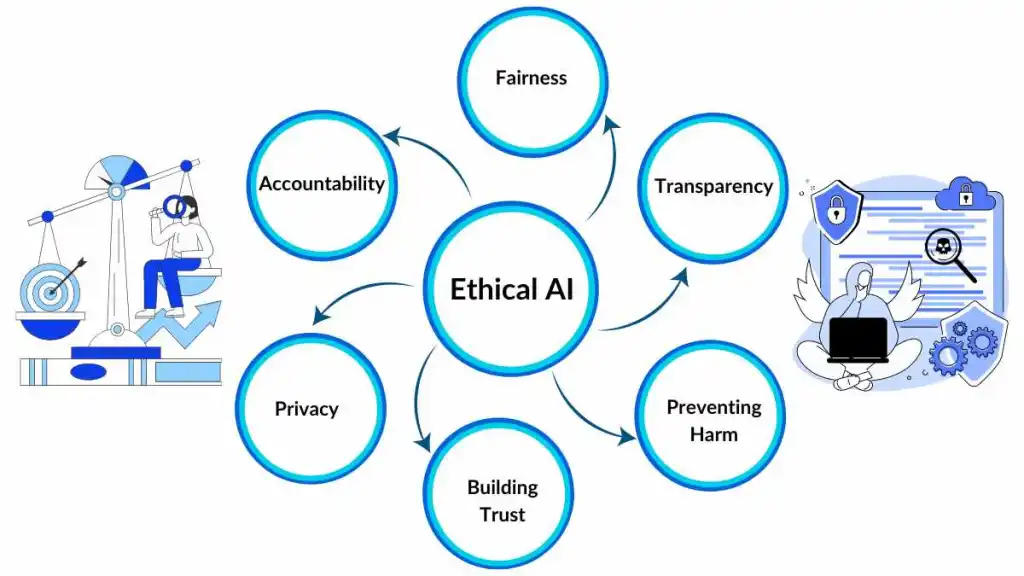
Introduction to AI Ethics
As AI becomes increasingly integrated into society, ethical considerations become essential. This topic introduces the principles of responsible AI, including fairness, accountability, transparency, and human-centered design. Learners will understand why ethical AI development is critical for building trust and ensuring positive societal impact.
Bias and Fairness in AI
AI systems learn from data, and biased data can lead to unfair outcomes. This topic explores different types of bias that can occur during data collection, model training, and decision-making processes. Learners will examine real-world examples of AI bias and understand strategies to minimize unfairness.
Transparency and Explainable AI
Many AI systems operate as “black boxes,” making it difficult to understand how decisions are made. This topic explains the importance of transparency and explainable AI in helping users, organizations, and regulators understand and trust AI systems. Learners will explore methods for improving AI interpretability and accountability.
Privacy, Security, and Responsible AI
AI systems often rely on large amounts of personal and sensitive data. This topic discusses privacy concerns, data protection practices, cybersecurity risks, and regulatory requirements related to AI applications. Learners will understand how organizations can develop AI systems responsibly while protecting user information.