

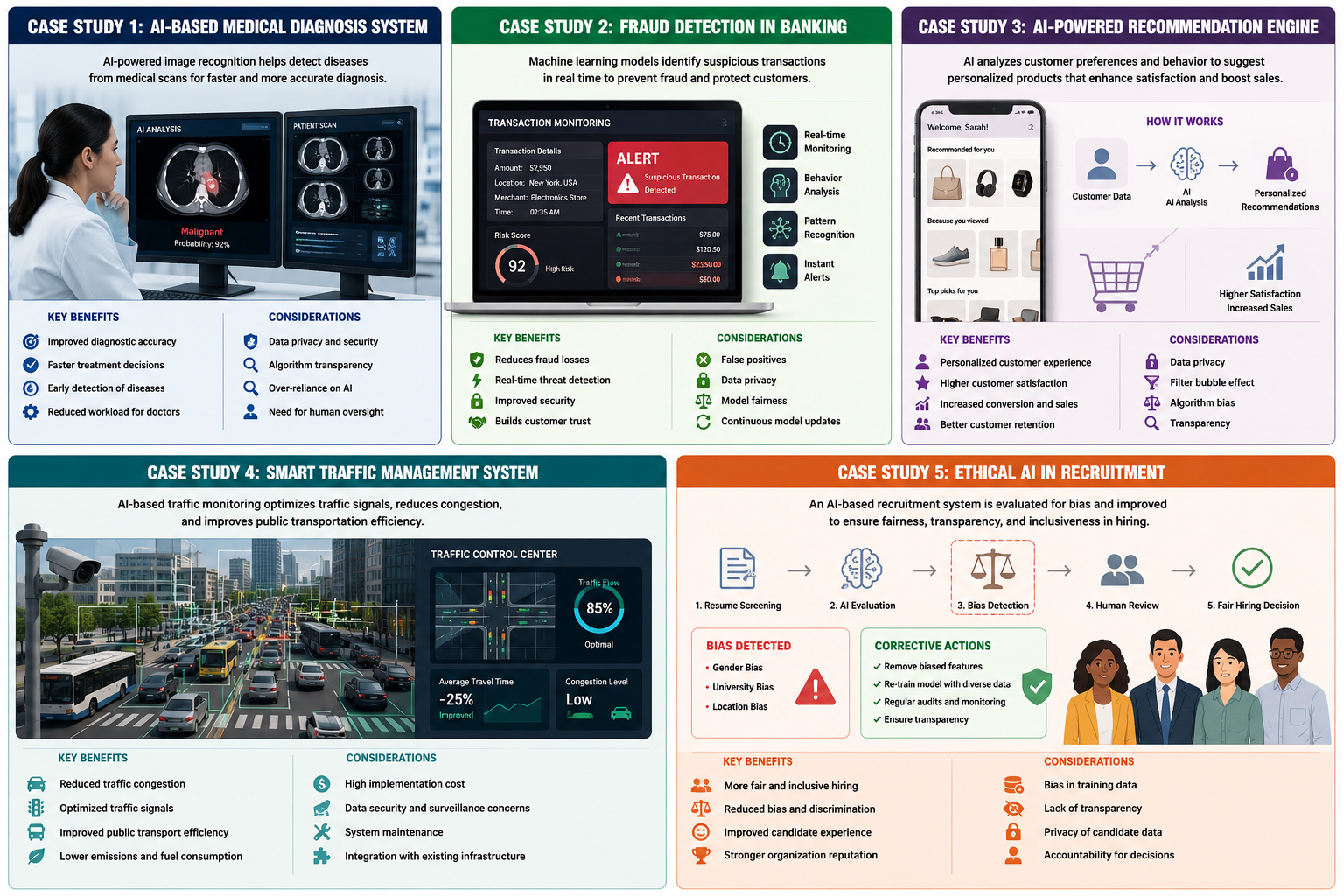
Case Study 1: AI-Based Medical Diagnosis System
A healthcare organization uses AI-powered image recognition systems to detect diseases such as cancer from medical scans. The system improves diagnostic accuracy and helps doctors make faster treatment decisions. Learners will analyze the benefits, limitations, and ethical considerations of AI-assisted healthcare.
Case Study 2: Fraud Detection in Banking
A financial institution implements machine learning models to identify suspicious transactions in real time. By analyzing customer behavior and transaction patterns, the bank reduces fraud losses and improves security while maintaining customer trust.
Case Study 3: AI-Powered Recommendation Engine
An e-commerce company uses AI to analyze customer preferences and purchasing history. The recommendation engine suggests personalized products, improving customer satisfaction and increasing sales revenue.
Case Study 4: Smart Traffic Management System
A city administration deploys AI-based traffic monitoring systems to optimize traffic signals, reduce congestion, and improve public transportation efficiency. Learners will evaluate how AI contributes to smart city initiatives.
Case Study 5: Ethical AI in Recruitment
A company adopts an AI-based recruitment system to screen job applications. During implementation, the organization identifies potential bias in hiring recommendations and takes corrective actions to ensure fairness and inclusiveness. Learners will evaluate the ethical implications of AI in human resource management.